
ASHPs for Heritage Wedding Venue
project snapshot
Eliminating oil from a scheduled monument site
the client
Luxury wedding venue
This project is the second phase of a wider energy strategy at the same luxury Bedfordshire wedding venue featured in our Solar PV case study. The business operates within the boundaries of a national scheduled monument, offering a full catering operation, function rooms, bar areas, bridal suites, a traditional barn for ceremonies, and on-site guest accommodation – all off the mains gas network.

the challenge
Careful planning permission management
With the solar PV system in place, the next phase was to address the site's heating and hot water, still being provided entirely by oil-fired boilers. Heating oil costs were high and volatile, and the Scope 1 emissions associated with on-site combustion were the largest remaining contributor to the site's carbon footprint.
The goal was to electrify the heating systems entirely, eliminating oil from the site and to integrate the heat pumps with the existing solar generation to maximise use of clean on-site electricity. The site's status as a scheduled monument and designated conservation area again meant planning permission would require careful management.
route to a solution
Managing the planning process
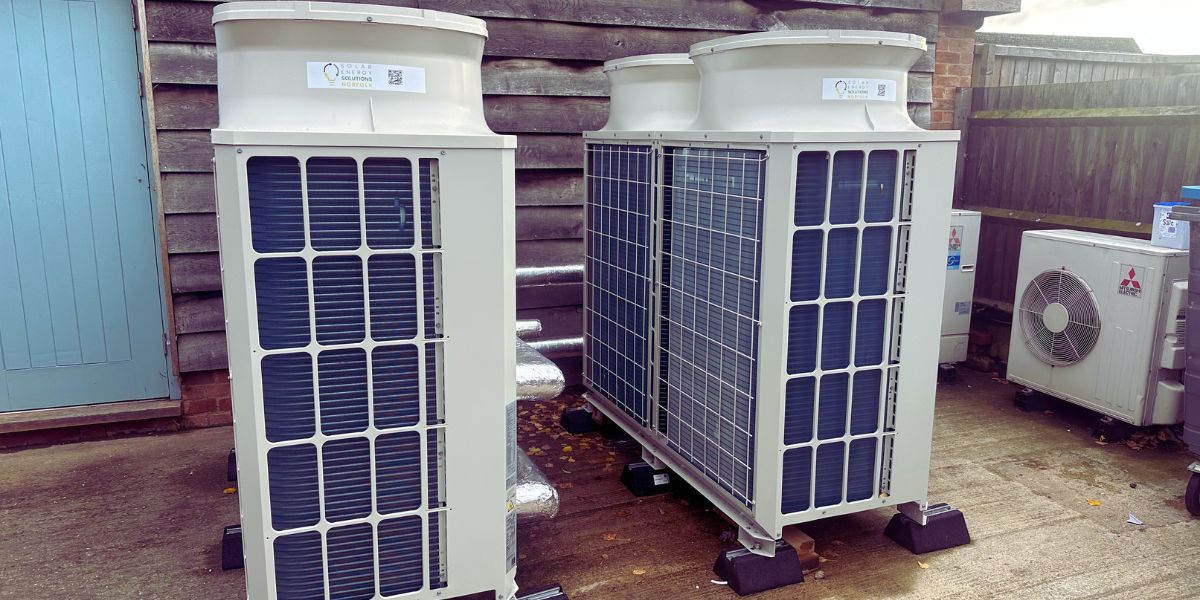
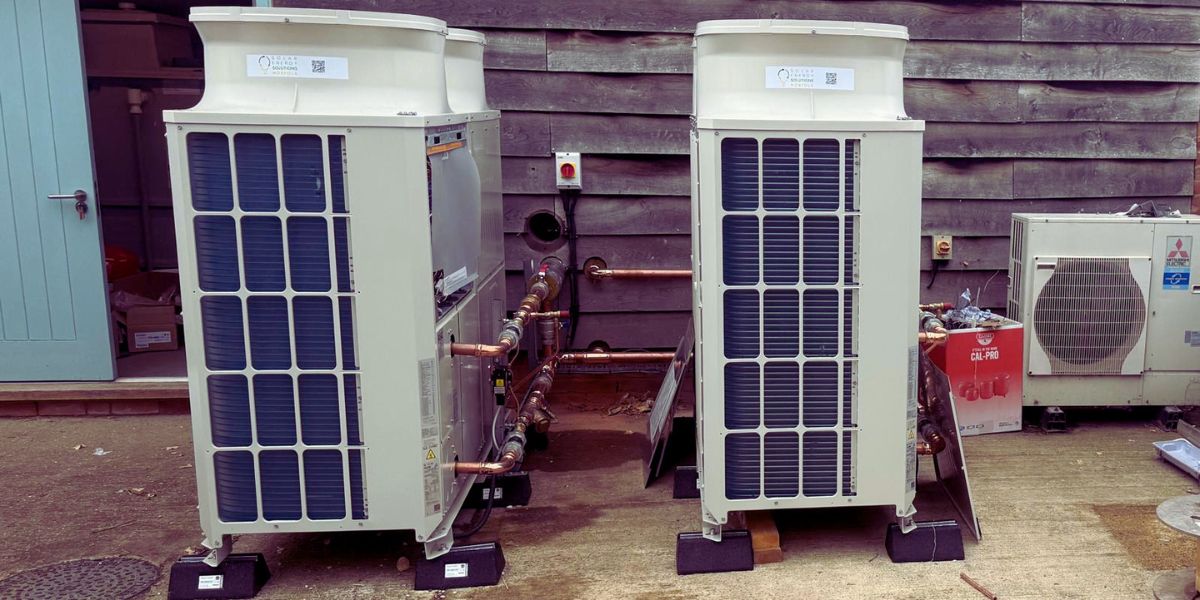
The Practical Energy Solutions (PES) team carried out heat loss surveys and thermal imaging across all buildings to determine the appropriate heat pump sizing. Two 37kW Mitsubishi HVAC high-temperature air source heat pumps were specified for the main venue, with a 16kW unit for the guest accommodation.
Planning permission was required, and PES managed the full application process on behalf of the client, including heritage statements, transport statements, land searches, and liaison with local planning officers – consistent with the approach taken for the solar PV installation.
An existing compound adjacent to the venue was repurposed to house the heat pump units, with screening installed to minimise visual impact and comply with planning requirements.
the system
Final installation
Main venue: Two 37kW Mitsubishi HVAC high-temperature air source heat pumps were installed and integrated into the existing wet heating system, alongside a 1,000-litre hot water storage tank. The system was configured to prioritise heating during peak daylight hours, maximising use of the solar electricity generated on site.
Guest accommodation: A 16kW Mitsubishi HVAC high-temperature heat pump replaced the existing oil-fired boiler, connected to the existing wet system. The 16kW unit was eligible for a Boiler Upgrade Scheme (BUS) grant, partially offsetting the capital cost.All oil storage tanks were safely decommissioned and removed, with the areas cleared and made good.

Significant savings
The integration with the on-site solar PV system means the heat pumps run predominantly on self-generated electricity during daylight hours, reducing their operating cost further and improving the overall carbon position of the site.
two phase project
The wider picture
Taken together, the solar PV installation and the heat pump project represent a coordinated, phased approach to decarbonising a complex heritage site with no mains gas connection. Phase one addressed electricity costs and generation; phase two eliminated fossil fuel heating. The result is a site now running predominantly on self-generated renewable electricity, with oil removed from the energy mix altogether.
This is exactly the kind of multi-technology, phased strategy that PES designs from the outset – ensuring each phase of investment supports the next, rather than creating conflicts or redundancy.
site emissions
ECG and wider benefits
Eliminating heating oil from the site removes the most significant source of direct carbon emissions and strengthens the venue's sustainability credentials with its clients. For a wedding venue, the ability to market genuine decarbonisation – rather than aspirational targets – is an increasingly meaningful commercial advantage.
book a consultation
Thinking about solar for your business?
This project demonstrates that high-temperature air source heat pumps can replace oil-fired boilers effectively, even in complex heritage settings – and that the economics are strong when integrated with on-site generation.